


Get instant AI matches free → to see AI influencer discovery and matching applied to your niche in minutes. Your job is to turn that precision into repeatable revenue, and this guide shows how to choose, launch, and measure the right system for e-commerce in 2026.
Whether you manage a DTC storefront or a marketplace catalog, the right ai influencer discovery and matching approach determines if your next drop sells out or stalls. Below, you’ll learn how to assess platforms, avoid common traps like fake reach and scattered attribution, and ship campaigns that connect content to checkout with confidence.

Why E-commerce Brands Struggle to Find the Right Influencers
Manual vetting is slow, and social data is noisy. You can comb through hundreds of profiles, only to find inflated reach or mismatched audiences. Meanwhile, the algorithm moves on. Campaign windows close. Your team burns weeks and still feels unsure.
However, the bigger drag is fake or idle followers. Ghost accounts skew engagement, inflate CPMs, and hide where real buyers live. Without strong fraud checks, you pay for “reach” that never sees your product or your checkout. Worse, it erodes trust in the channel.
In addition, niche alignment is hard from the outside. Two creators can post similar content yet speak to very different buyers. One might lean into discount culture; the other builds long-term, premium taste. On the surface they look alike, but their impact on AOV or subscription churn won’t match.
Finally, ROI attribution breaks in handoffs. Screenshots, UTM links, codes, and platform exports don’t line up. As a result, you ship reports that no one fully trusts. Your next budget gets cut or pushed to paid search where tracking feels “cleaner,” even if costs rise.
Timing and Safety Complications
Beyond these core problems, platform volatility and content fatigue make timing unforgiving. A creator’s performance can swing overnight due to a trend shift or algorithm tweak, and if your workflows require five tools and six approvals, you’ll miss the window. Brand safety adds more complexity: you must verify that creators’ past posts, comments, and collaborations won’t blindside your legal team. And if you lack clear usage rights and allowlisting permissions up front (also called “allowlist” permissions when you authorize a brand to run ads through a creator’s handle), you can’t amplify winning content through paid social, which leaves incremental sales on the table.
Operational realities add still more friction. Product seeding can stall on inventory holds or customs delays, while API rate limits and changing platform policies can disrupt tracking just when you need it most. Meanwhile, creators juggle multiple brand asks; if your brief is unclear or payouts are slow, acceptance rates fall and your calendar slips. These delays compound across teams, and each manual step becomes a potential point of failure when launch windows are tight.
The four friction points
- Manual discovery burns weeks and still misses hidden-fit creators. (The best partners often live in micro and mid tiers that surface only with deep topic and audience signals.) Even diligent teams can overlook emerging voices whose communities quietly over-index on your buyer persona because conventional search relies on hashtags and follower counts.
- Fake followers mask true engagement and waste spend. (Anomalous spikes, follow/unfollow churn, and comment pods can boost vanity metrics without buyers.) Left unchecked, this pushes you to optimize for CPM instead of profitable CAC, and the delta only shows up after budgets have been committed.
- Niche and value alignment are hard to judge from surface metrics. (A 3% ER means little if it’s outside your buyer persona or price sensitivity.) Lifestyle cues, brand affinities, and historical purchase behaviors matter more than broad reach, especially when your SKU mix varies by margin and replenishment cycles.
- Sales attribution scatters across links, codes, and screenshots. (When each team exports a different CSV, nobody trusts the blended ROAS.) Without a single source of truth, decisions degrade into HiPPO bets, and growth slows because wins can’t be proven or repeated.
For these reasons, teams turn to smarter systems. As you assess ai influencer discovery and matching, keep your eyes on speed, fraud checks, niche signals, and proof of sales, those four decide your real ROI. If a platform can’t compress search-to-launch into days and show you revenue by creator, it’s adding friction instead of removing it. The most resilient programs design around these friction points with automation, clear SLAs, and creative rights that anticipate downstream amplification via allowlisting and creator licensing.
Also Read!
How to Track Influencer Campaign Analytics for E-Commerce Brands
Infliuence vs Grin for E-Commerce Brands: Which Is Better for Influencer Campaign Analytics?
What to Look for in an AI Influencer Matching Platform
You need a platform that acts like a teammate who never sleeps. It should search at scale, match beyond keywords, and flag risk before you pay. Then it should launch campaigns fast and track sales in real time. Anything less adds back the work you meant to cut.
Moreover, accuracy in matching matters more than catalog size. The best AI reads niche, region, engagement quality, and audience makeup all at once. It learns from past wins and avoids creators who don’t convert for your product type. If it can’t rank by likely sales impact, you’re back to guessing.
In addition, e-commerce fit is non-negotiable. Your stack needs clean links, discount codes, product seeding, contracts, and payouts in one flow. Otherwise you bounce between tools and lose hours. The right system brings campaign briefs, creative approvals, and analytics into one trackable loop.
Explainability, Safety, and Privacy
Explainability and guardrails also matter. Ask how the AI arrives at a match, can you see the topics, audience demographics, and quality signals that drove the score? Brand safety filters should scan past content and comments, not just bios. Ideally you can trace scores to interpretable features (e. g., overlap with your top customer segments, content cadence, or past conversion lift) so that humans can nudge the system without guesswork.
Fraud detection must blend heuristics (sudden follower spikes, low Story views vs. follower count) with network analysis to spot bot clusters. And for global brands, native support for regions, languages, and compliance (consent for affiliate links, required disclosures) will keep campaigns smooth across borders. Look for privacy-by-design as well: first-party pixel integrations, consent tracking, and the ability to respect user opt-outs while still tying content to commerce outcomes.
Evaluation checklist for 2026
- AI matching accuracy: Scores creators on niche, region, engagement quality, and audience fit — not just follower count.
- E-commerce integration: Works with product seeding, unique links/codes, and SKUs to connect content to checkout.
- Fraud detection: Flags bot patterns and anomaly spikes before invites go out.
- Workflow automation: Moves briefs, approvals, usage rights, and deliverables through clear stages with alerts.
- Payout handling: Automates creator payments and tax forms so finance stays sane.
- Analytics depth: Ties clicks, adds to cart, and sales back to each creator in one dashboard you can trust.
- Free access to start: Lets your team test matches and templates without a contract.
- Transparency controls: Lets you drill into why a creator matched and adjust weights (e. g., de-emphasize reach, boost past sales lift).
- Brand safety filters: Screens historic posts and community interactions for sensitive topics aligned with your policy.
- Cross-platform reach: Surfaces creators across TikTok, Instagram, YouTube, and emerging channels so you can test where buyers actually convert.
- First-party data options: Supports your pixel, server-side events, and CDP connections to enrich attribution without violating user consent.
- Experimentation support: Enables A/B tests on briefs, offers, and hooks so you can learn which angles drive higher AOV or repeat purchase.
- Collaboration UX: Provides creator-friendly portals (deliverables, revisions, and allowlisting approvals) to keep communication crisp and acceptance rates high.
- Predictive outcomes: Estimates likely ranges for CTR, CPA, and revenue contribution to help you plan budgets with guardrails.
- Contract intelligence: Highlights rights, usage windows, exclusivity, and allowlisting clauses so paid teams can plan amplification confidently.
For a quick primer on how the practice evolved and why social proof drives purchase, see Wikipedia’s overview of influencer marketing. While theory helps, your choice in ai influencer discovery and matching should hinge on two things: match precision and measurable sales lift. If a vendor can’t show cohort-level revenue differences between their AI picks and your baselines, keep looking.
How Infliuence Solves AI Creator Matching for E-commerce
Infliuence brings search, selection, launch, and sales tracking into one place. The AI doesn’t stop at surface keywords. Instead, it weighs creator niche, region, audience makeup, and engagement quality to produce a ranked shortlist that fits your product and your goals.
In practice, you start with a campaign brief. The system then proposes creators and predicts likely performance bands. As a result, you move from a long list to a tight set in minutes. You can search and filter across niches, regions, and engagement levels to refine further, then invite with built-in messaging.

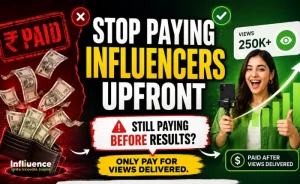
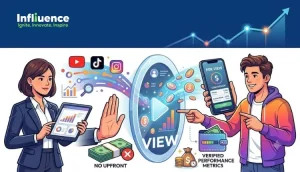
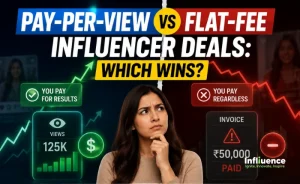
Moreover, launches don’t drag. Ready-made templates for quick campaign launches keep your team out of blank docs and into live posts. Contracts are built-in, and automated payouts align with generated views. Tax form management is handled too, so finance has a clean trail without extra tools.
Launch, Measure, and Prove Incrementality
Furthermore, analytics go beyond likes. You track sales, engagement, and brand lift in one place, tied back to each creator and post. Therefore, you can compare creators on real business impact, not just a viral moment. The loop closes with insights you can ship to leadership without a cleanup sprint. If attribution is your sticking point, Infliuence supports first-party event capture and merges link/coupon data with post metadata so your dashboards reflect true incrementality rather than last-click noise.
Infliuence also stresses integrity at scale. Fraud and anomaly detection run before invites, flagging questionable spikes in followers or engagement quality. Audience authenticity scores help you avoid paying for impressions from botnets or inactive clusters. Brand safety screens give legal confidence, while usage-rights templates and allowlisting permissions ensure you can boost top‑performing content in paid without renegotiations. With creator allowlisting, you can run ads through the creator’s handle for trusted social proof while retaining your optimization controls.
On the operational side, creator CRM features keep relationships warm: saved segments (e. g., “high AOV performers,” “EU product testers”), tags for product fit, and notes on past collaboration quality. When a product line expands or a seasonal promo kicks in, you already know who to re-engage, and payout automation reduces friction so good partners want to return. Webhooks and native integrations pipe accepted offers and delivery milestones to your internal tools, so merch, CX, and finance stay aligned without manual updates.
Under the hood, the matching engine blends semantic topic models with engagement quality scores and audience graph data. It learns from each campaign’s outcomes, re-weighting features like average order value impact, return rate, and content style resonance. Over time, the system shifts from “good fit” to “proven fit,” prioritizing creators with demonstrated contribution to margin, not just clicks.
“Sales spiked 40% in the first month, all through relatable reels.” — Pulse Energy
“Our brand struggled to connect online until creators showed how our lamps lit up their cozy spaces. We sold out three collections in a row.” — GlowNest
“We replaced three disconnected tools with Infliuence and cut our launch time from 3 weeks to 4 days. Clear briefs, creator portals, and automated payouts made the difference.” — Harvest Home
From brief to live content, fast
- Define your offer with a template, not a blank page.
- Approve a smart shortlist, not a spreadsheet maze.
- Launch with built-in contracts and payouts, not email threads.
- Measure revenue and repeat winners in the same dashboard, not scattered exports.
- Scale with allowlisting and creative variants so paid amplification compounds what’s already working.
As you compare tools for ai influencer discovery and matching, check whether they deliver this end-to-end path. If any link is missing, matching, workflows, payouts, or analytics, the work slides back to your team.
If your priority is ai influencer discovery and matching that ties to sales, favor a tool that blends precise AI picks with e-commerce workflows and payout automation. Otherwise, your “platform” turns into a patchwork of spreadsheets and DMs.
Also Read!
Best Influencer Campaign Analytics for E-Commerce Brands in 2026
How to Use AI Influencer Matching to Drive Sales for Your E-Commerce Brand
Trust, Scale, and Proven E-commerce Results
Trust grows when teams can see clear wins and clean handoffs. Infliuence is built for DTC and e-commerce brands, with end-to-end workflows that keep your legal, finance, and creative teams aligned. That focus shows up in rapid launches, creator-friendly payouts, and dashboards that make revenue attribution straightforward.
“Experience one of its kind influencer marketing—connect with verified influencers, track real-time performance, and gain data-driven insights to build long-term, transparent relationships. No middlemen, no hidden fees.” — Infliuence customer
In addition, real brands have shipped real outcomes. Pulse Energy saw a 40% sales lift in the first month via short-form video. GlowNest moved from product shots to lifestyle content and sold out three drops in a row. PlayForge doubled its Discord community as authentic creator reactions outperformed banner ads. PureLeaf Skin built credibility through 30‑day journey videos that no static ad could match.
Moreover, scale must come with care for creators. Built-in contracts and automated payouts remove friction that slows repeat work. As a result, creators come back for second and third collabs, which is where true brand lift compounds over time.
Data Stewardship and Compliance at Scale
Data stewardship underpins that trust. Role-based access keeps finance, legal, and marketing in their lanes while sharing the same source of truth. Clear audit trails for contracts, payouts, and performance make compliance reviews faster and reduce reporting debt at quarter’s end. And by centralizing workflows, you minimize the copy‑paste errors that come from juggling spreadsheets, DMs, and point tools. Infliuence supports standard disclosure formats, regional compliance tags, and consent logs for affiliate links so that your brand, your creators, and your audiences remain protected.
- Security baselines: SSO, encryption at rest and in transit, and vetted payment partners for safe money movement.
- Governance: Granular permissions, environment controls (sandbox vs. production), and export APIs for BI alignment.
- Regional readiness: Localized tax forms, currencies, and disclosure tags to publish compliantly in each market.
At enterprise scale, these guardrails matter even more. Single sign-on, granular permissions, and environment-level controls (sandbox vs. production) keep experimentation safe, while SLAs and export APIs ensure you can mirror performance data into your BI stack. When procurement asks about security, you can point to encrypted payouts, vetted payment partners, and a transparent money-movement trail that stands up to audits.
If your goal is trust at scale, choose systems that combine creator vetting, workflow reliability, and transparent money movement. In e-commerce, reliable, repeatable wins beat one-off viral spikes. That’s the lens to apply to any ai influencer discovery and matching pitch you hear.
How to Get Started with AI Influencer Matching on Infliuence
Getting started should take hours, not weeks. With Infliuence, signing up is completely free, and you can draft your first brief in minutes. Ready-made templates for quick campaign launches remove the blank-page fear, and AI matching handles the heavy lifting from there.
Step-by-step setup
- Create your free account. No contracts or detours — go straight to your dashboard.
- Set your campaign brief. Use a template to define product, audience, goals, and deliverables.
- Let the AI match creators. Review a ranked shortlist filtered by niche, region, and engagement quality.
- Approve the shortlist and contracts. Built-in terms and rights keep legal tidy; tax forms are handled.
- Launch and track. See clicks, engagement, and sales update in real time, mapped back to each creator.
- Optimize and scale. Reinvest in top performers, expand SKUs, and test new formats (UGC, live shopping, allowlisting) using saved segments.
Moreover, most users are Live within 24 hours. That speed helps you ride trends, restock fast-movers, or test bundles before a big promo. As a result, you learn faster and scale campaigns with evidence, not hunches.
To accelerate early wins, set clear incentives in the brief (tiered payout, product bundles, affiliate %), provide creative guardrails without scripting authenticity out of the content, and request a test post when stakes are low. With ai influencer discovery and matching narrowing the field, your outreach can be lighter, friendlier, and more relevant, which raises acceptance rates. Include an allowlisting clause during contracting so high performers can be amplified through paid without revisiting terms when momentum hits.

If you’re ready to see your first shortlist, there’s nothing in your way.
[Try AI matching free today →]
Also Read!
Frequently Asked Questions
How much does AI influencer matching cost on Infliuence?
Signing up is completely free. You can explore AI matching and campaign templates at no upfront cost. Paid tiers scale with the number of campaigns and the depth of features your team needs. For current details, check the pricing page once you’re ready to plan budgets. Many brands start free to validate fit, then move to a tier that unlocks advanced analytics, higher creator messaging limits, and multi-user controls as volume increases.
How accurate is AI creator matching compared to manual search?
AI reads niche, region, engagement rate, and audience demographics at the same time, which manual vetting can’t match at scale. It cuts guesswork and reduces time-to-shortlist so you can launch faster. Notably, Infliuence’s AI helped the Olay Skincare Summer Campaign reach 1.02M views with an 84% approval rate. That kind of result points to fit, not luck. Accuracy improves over time as the system learns from your outcomes, so your second and third campaigns typically see sharper shortlists and fewer revisions.
Does Infliuence work for small e-commerce brands or only enterprise?
It serves both. DTC startups use ready-made templates and free sign-up to move fast without extra hires. At the same time, enterprise teams run complex programs with built-in contracts, automated payouts, and tax form management. Trusted by 50,000+ brands and creators, the platform supports growth at every stage. Start light, add users and workflows as your product catalog and channel mix expand.
How does Infliuence compare to Aspire or Grin for e-commerce?
Unlike Aspire and Grin, which usually require demo calls and annual contracts, Infliuence lets you get started for free and see AI matches right away. It also includes built-in payout and tax handling to reduce admin work for finance teams. For e-commerce and DTC brands, that focus on launch speed and money movement can be the edge in peak seasons. Side-by-side, brands often cite faster onboarding, fewer required integrations to get to “first dollar of revenue,” and clearer allowlisting workflows that support paid amplification without legal back-and-forth.
Can I track influencer-driven sales directly on the platform?
Yes. You can track clicks, engagement, sales, and brand lift in one dashboard with real-time performance analytics. Each creator’s results roll up cleanly, so you can attribute revenue to specific posts and people. That clarity helps with re-investment decisions and end-of-quarter reporting. You can also export or sync performance to your BI tools to benchmark creators against other acquisition channels.
How quickly can I launch my first influencer campaign?
Most users go live within 24 hours. Ready-made campaign templates remove setup friction, while AI creator matching gives you a strong shortlist fast. Approvals, contracts, and payouts live in the same workflow, so nothing blocks the launch. You can move from idea to live content in a single workday. Many teams begin with a 10–20 creator pilot, then expand to a rolling calendar once baseline CPA and AOV metrics are confirmed.
Does the platform handle influencer contracts and payments?
Yes. Infliuence includes built-in contracts that reflect your deliverables and rights, plus automated payouts based on generated views. Tax form management is handled in-platform, which keeps finance and compliance in sync. That means fewer back-and-forth emails and faster cycles. You can store standard clauses (usage rights, exclusivity, allowlisting permissions) as templates so legal reviews don’t reset with each campaign.
What campaign types does Infliuence support for e-commerce?
You can run paid collaborations, product seeding, UGC campaigns, and unlimited brand collabs. Briefs, approvals, and content rights are managed in one place. As a result, your team can test new formats without adding tools or custom workflows. Popular flows include seasonal drops, new SKU trials, post-purchase UGC requests, and creator-led bundles that pair hero products with margin-friendly add-ons.
Which social platforms are supported?
Infliuence surfaces and tracks creators across TikTok, Instagram, and YouTube, with options to test newer formats like short-form video and live shopping where available. Matching prioritizes the platforms where your audience already engages and buys, so you can allocate budget based on real conversion patterns rather than hype. As platforms evolve, Infliuence updates metadata capture and performance models so your reporting keeps pace with new surfaces and creative specs.
How are fake followers and engagement pods detected?
The platform blends multiple signals: follower growth consistency, ratio of Story views to follower count, engagement velocity vs. content age, audience geography anomalies, and cross-channel corroboration. When thresholds trip, creators are flagged for review before invites go out, protecting your CPMs and brand trust. Network-level analysis also checks reciprocal commenting rings and shared IP clusters to reduce false positives from legitimate viral growth.
Does Infliuence support multiple regions and languages?
Yes. Matching considers region and language to ensure cultural fit and shipping feasibility. You can filter by country, region, and language, and set compliance requirements (e. g., regional disclosure tags) in briefs so creators publish correctly the first time. Currency, tax forms, and payout rails adapt to local norms, while content reviews can route to in-market approvers to protect nuance.
Final Takeaways
- Match quality beats follower count. Choose AI influencer discovery and matching that ranks creators by niche fit, engagement quality, and audience.
- E-commerce needs end-to-end flow. Briefs, contracts, payouts, and analytics belong in one trackable system if you want repeat wins.
- Proof fuels growth. Tie sales to creators, learn fast, and scale what works — the rest is noise.
- Fraud checks save budgets. Invest in authenticity scoring and anomaly detection before you send a single invite.
If you want a shortlist built for your next drop, you can test it at no cost and decide with data.