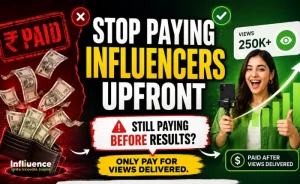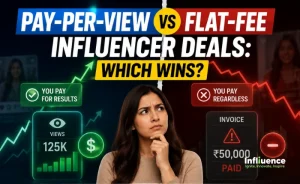


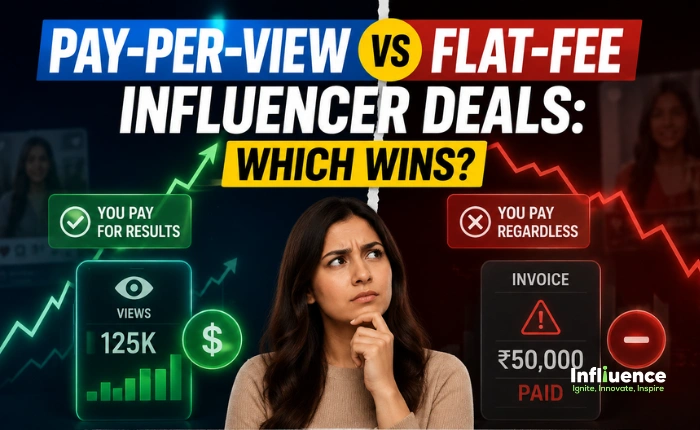
Most brands waste a third of their influencer budget before a single view comes in. That’s not pessimism — it’s what the numbers show when you look at how flat-fee campaigns actually distribute performance.
Here’s the uncomfortable truth: in a typical flat-fee campaign with five creators, one video significantly overperforms and two hit roughly average numbers — which means two or more quietly underperform. You paid everyone the same. You knew none of this in advance. And you will probably do it again next quarter because the briefing process felt professional and the invoices arrived on time.
This is the structural flaw in how most brands approach influencer deals, and it’s worth fixing before you scale.
Listen To The Podcast Now!
Why Flat-Fee Deals Feel Safe But Aren’t
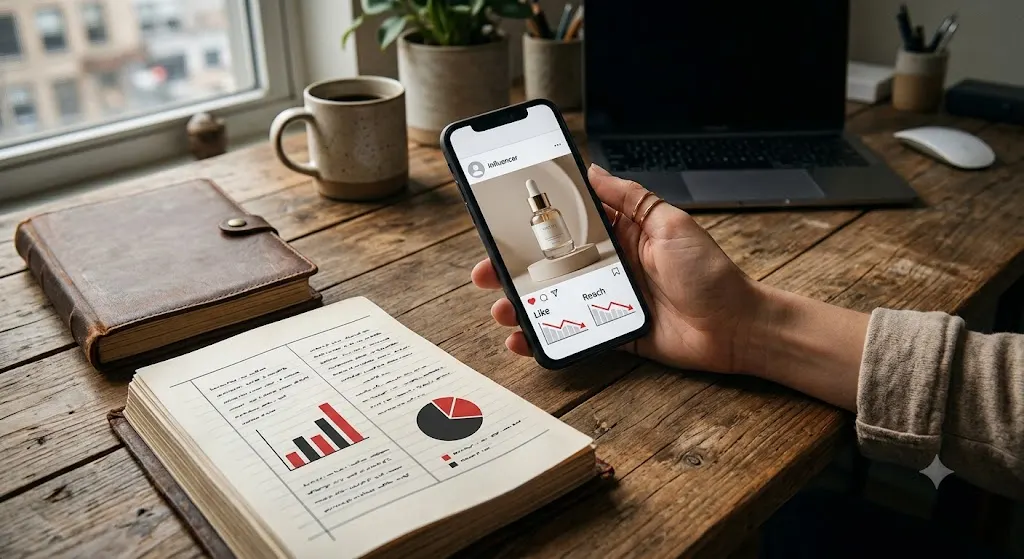
The appeal of flat-fee pricing is obvious. You agree on a number, the creator posts, you move on. Clean. Predictable. Easy to budget.
The problem is that “predictable spend” is not the same as “predictable return.” You’re paying for the creator’s time and distribution potential — not for actual views. When that potential doesn’t convert, the budget is already gone.
Flat fees also misalign incentives in a subtle way. Once a creator is paid, their commercial stake in the content’s performance drops to zero. They might care about their own audience and reputation, sure. But your conversion rate? That’s your problem now.
According to Linqia’s 2026 State of Influencer Marketing Report, 62% of brands are increasing their influencer budgets this year. More money into a structurally flawed model is just a faster way to learn an expensive lesson.
What Pay-Per-View Actually Changes
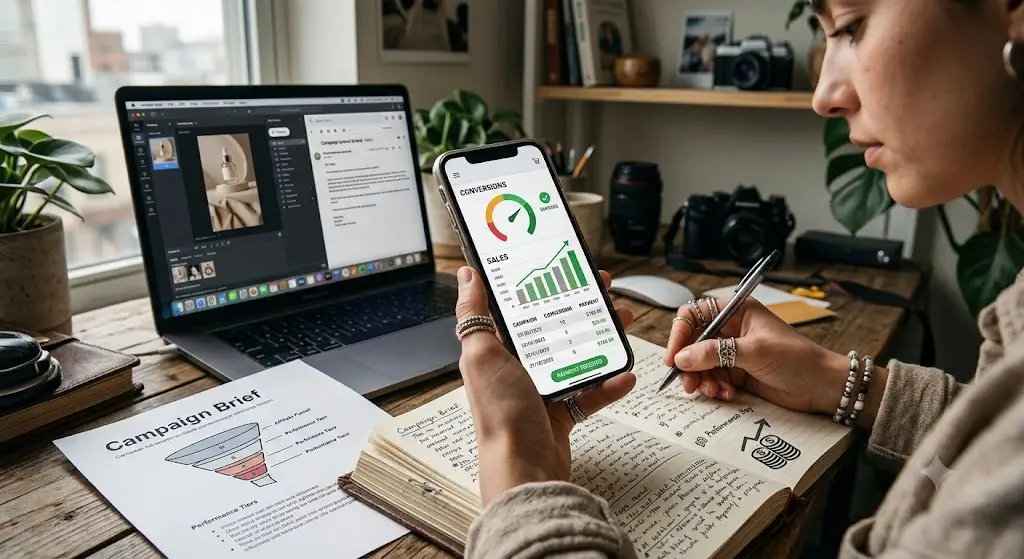
Pay-per-view (PPV) flips the risk. Instead of paying a creator upfront for a post, you pay for the views that post actually generates. If the content underperforms, you spend less. If it overperforms, you spend more — but you’re getting proportional return.
The incentive alignment is real. A creator who earns based on views has a stake in producing content that actually connects with their audience, not just content that technically fulfills a brief.
This is exactly the model that Influence, the influencer-marketing platform used by 50,000+ brands and creators, is built around. Brands on the platform pay creators only for views generated — not upfront. There are no middlemen and no hidden fees, which means the rate you agree on is the rate you pay.
For D2C startups watching cash flow closely, this matters. In a flat-fee deal, you commit the full amount before a single view arrives — and if a creator underperforms, that money is gone. PPV ties spend directly to delivery: you pay for what the content actually generates, not for what it might.
What Commonly Goes Wrong With PPV Campaigns
Pay-per-view isn’t a silver bullet. Done poorly, it creates its own failure modes.
1. Creators Optimise for Views, Not Conversions
A creator who gets paid per view will naturally gravitate toward content that gets watched — which isn’t always content that sells. Entertaining beats persuasive. Viral beats relevant. If you don’t brief tightly for intent, you can rack up impressive view counts with zero downstream impact on sales.
The fix: be specific about what a “qualified view” looks like in your brief. Watch time thresholds, call-to-action requirements, and audience targeting all shape whether views translate to business outcomes.
2. No Visibility Means No Control
PPV campaigns fail when brands set them live and then check in three weeks later. By then, the content has already peaked and the window to optimise — swap underperforming creators, double down on overperformers — has closed.
This is where Influence’s Live Campaign Dashboards earn their keep. You monitor performance, engagement, and ROI in real time, not in retrospect. When one creator is pulling far ahead of the others, you see it within days, not at the end-of-campaign report.
3. Choosing the Wrong Creators for the Model
PPV rewards consistency. A creator who occasionally goes viral but usually posts to a disengaged audience is a liability in this model — their view rate swings wildly, making budget forecasting unreliable. You want creators with demonstrably consistent engagement, not headline follower counts.
Nano and micro-influencers consistently outperform larger accounts on engagement rate — and in a PPV model, engagement rate is a much better proxy for consistent view delivery than raw reach. Influence lets you filter creators by niche, region, and engagement level, so you can build a roster weighted toward reliable performers rather than one-off viral potential.
A Practical Framework for Your First PPV Campaign
Here’s how to structure this without the common missteps:
- Define your view threshold before you brief anyone. What view count would make this campaign worthwhile at your target CPV? Work backward from revenue, not forward from budget.
- Filter for engagement-first creators. Use Influence’s creator filtering to identify creators in your niche and region with above-average engagement levels. A smaller, more engaged audience beats a large disengaged one in this model every time.
- Brief for intent, not just content. Specify the action you want viewers to take. A strong PPV brief includes the CTA, any required product mentions, and what “good” looks like — not just what the video should cover.
- Set your campaign live and monitor within 48–72 hours. Early signals are reliable. If a piece of content is going to perform, you’ll usually see the trajectory in the first few days. Influence’s AI-Powered Campaign Matching and Smart Analytics & Reports mean you’re not interpreting raw data — you’re looking at actionable performance signals.
- Rebalance mid-campaign. The biggest structural advantage of PPV is that you haven’t committed equal spend to every creator upfront. Use that flexibility. Creators overdelivering on views warrant more amplification; underperformers can be deprioritised without sunk-cost guilt.
The Budget Reality for Indian Brands
One dimension that doesn’t get enough attention in influencer pricing guides is how differently these models land depending on your budget size. Flat-fee rates for creators vary enormously, and for a D2C brand with a tight monthly budget, one underperforming creator in a flat-fee deal can wipe out most of the month’s influencer spend.
PPV changes the risk profile significantly at smaller budgets. Instead of committing a fixed sum to a single creator’s post before it goes live, you distribute risk across multiple creators and pay proportionally to what each delivers. The math only works in your favour when underperformers cost you less.
Influence is trusted by 500+ brands across India. The pay-per-view model it runs on is particularly well-suited to e-commerce and D2C brands running product seeding and gifting campaigns — categories where you can draw a direct line from views to site traffic to transactions. Most users on the platform go live within 24 hours of setting up their workflow, which means the iteration speed is genuinely faster than traditional flat-fee deal cycles, which involve negotiation, contract, payment, and then waiting.
When Flat-Fee Still Makes Sense
Fair is fair: PPV isn’t the right model for every campaign.
Brand-awareness plays — where you genuinely don’t have a conversion event to measure against — are harder to run on PPV. If you’re launching in a new market and your goal is simply to be seen, the relationship between views and business outcome is too diffuse to make PPV structurally superior.
Similarly, if you’re working with a creator whose content format is inherently low-view but high-conversion (think niche B2B LinkedIn content, or very specific community Discord posts), flat-fee may reflect the real value better than a view-count metric would.
The question to ask isn’t “which model is better?” It’s “which model aligns payment to the outcome I actually care about?” For most product-led campaigns, that’s PPV. For pure brand-building, the calculus is different.
What to Do Next
If you’re currently running flat-fee campaigns and suspect you’re in the portion of budget that isn’t pulling its weight, the first move is simple: pull your last campaign’s creator-by-creator performance breakdown. If one creator drove the majority of your results, you have your answer about what your current model is actually funding.
For a deeper look at how to structure your creator selection before you ever negotiate a rate, this guide to AI influencer discovery for e-commerce brands covers the matching mechanics in detail. And if you’re comparing platforms for managing creator relationships at scale, this breakdown of Influence vs Grin on CRM and creator database features is worth reading before you commit.
The structural shift from flat-fee to pay-per-view isn’t complicated. It’s a decision to stop paying for potential and start paying for delivery.
Start your free Influence trial and run your first pay-per-view campaign — most brands are live within 24 hours.