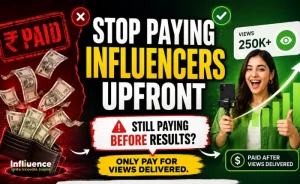



Here’s the answer up front for influencer campaign management with contracts and payouts: use one workflow for all clients, tie money to clear milestones, and only pay after content passes review. Then, keep tax docs and performance data in one place so your team and clients always see the same source of truth. In 2026, the agencies that win on creators don’t “wing it”, they run tight, boring, repeatable ops. Boring is profitable.
Tuesday, 8:13 p.m., your client’s Slack pings: “Where are the posts? Finance is asking why we paid 60% already.” You fix this by standardizing your contracts, hard-wiring payout triggers to approvals, and centralizing tax forms. That is influencer campaign management with contracts and payouts done right.
Moreover, this approach cuts chaos across teams. Your AMs stop chasing signatures. Finance stops guessing on ACH dates. Creators stop asking when they’ll get paid. And your clients stop reviewing content in random DMs that vanish.

Why Influencer Campaign Management Breaks Down at Agencies
Agencies don’t fail on ideas. They fail on ops. Campaigns crack under the load of five clients, three contract flavors, and a dozen one-off “quick” exceptions. As a result, your team pays early, approves late, and ships content that legal cannot back.
In practice, you see the same breakdowns. Contracts live in email threads, not in a system. Payment terms change per creator, so Finance has no cue to release funds. Drafts sit with a brand manager for five days because there’s no approval gate or SLA. Tax forms show up in March when your 1099 file should have gone out in January.
Furthermore, each “special case” compounds risk. A seed-only brief morphs into a paid reel with no updated scope. A flat fee turns into a second round of edits with no kill-fee clause. If a creator ghosts, you still owe media dollars because you prepaid.
- Operational cost of disorder:
- Context switching kills time across AMs and Finance.
- Prepayments without gates burn cash and trust.
- Missing tax forms push 1099 risk back onto your agency.
- Version chaos means clients approve the wrong draft.
“Sales spiked 40% in the first month, all through relatable reels.” — Pulse Energy
Therefore, you need a single system of record. Run campaigns with workflows, contracts, and approvals managed by the platform you choose. Even better, use built-in contracts, automated payouts, and tax form management so the process enforces itself. Do this and influencer campaign management with contracts and payouts stops being guesswork, it becomes muscle memory.
Step-by-Step: Building a Scalable Influencer Campaign Workflow
You don’t need 40 tools. You need one clear path that your entire team follows for every client and campaign type. The steps below work for both paid collaborations and product seeding.
1) Standardize contract templates per campaign type
First, create two base templates: one for paid posts and one for product seeding. For paid, include scope (format, length, platforms), timing, exclusivity, usage rights, approval windows, kill-fee, and payment schedule. For seeding, include receipt confirmation, disclosure, minimum content standards, and repost rights.
In addition, keep a short rider for brand-specific clauses (e.g., restricted claims for skincare). Ready-made templates for quick campaign launches help your team start work in hours, not weeks.
2) Define payment milestones and triggers
Second, break the deal into milestones.
- 20% on contract signature (optional)
- 40% after draft approval
- 40% after link validation and post goes live
For performance deals, tie payouts to a visible metric. Direct payments to influencers based on generated views or tracked sales guard your client budget and motivate creators. Moreover, this adds clarity to Finance, no trigger, no funds released.
3) Set up content approval gates
Third, add at least two gates: brief sign-off and draft approval. Require creators to upload content in a shared hub. Then, enforce a 48-hour brand review SLA. If you manage regulated products, include a legal approval gate with a redline log.
Specifically, define what “approved” means: correct tags, disclosures, discount codes, and link UTM. No code, no approval. No approval, no payout.
4) Automate payout schedules
Fourth, set payout runs tied to triggers, not to dates on a calendar. Finance needs a queue they can trust. As a result, your AMs stop sending “Did this post go live?” emails. If your tool supports it, schedule ACH after a status change to “Live + link verified.” If not, keep a single source sheet with formulas that flip to “Pay” only after inputs meet the rules.
5) Centralize tax documentation
Fifth, collect tax forms at the time of contract, not at the end of the year. For U.S.-based creators, see the IRS Form 1099-NEC guidance for who needs reporting and when. In addition, require W‑9 or W‑8BEN as a non-negotiable step before any payout. Store forms in the same place as the contract.
6) Build client reporting dashboards
Sixth, show live results and approvals in one view. Real-time performance tracking and analytics end the “What’s happening?” email thread. Include units that clients care about: spend to date, posts live vs. planned, reach, clicks, code redemptions, video views, CAC, and brand lift if available.
Moreover, create “views” by campaign type. Paid collaborations should chart against ROAS or CPA. Product seeding should report content volume, reach, and UGC reuse rate.

“Beauty vloggers shared their 30-day routines with our serum. Their before-and-after journeys built the credibility we could never buy.” — PureLeaf Skin
For example, a seeding campaign might use a simple one-page agreement, zero cash, one draft gate, and republishing rights for 90 days. A paid collab, by contrast, may require staged payments, stricter review gates, and a one-year paid usage license. Capabilities to launch various campaign types including paid collaborations and product seeding let you switch tracks without rebuilding the train.
Furthermore, think about launch speed. If your system includes AI creator matching and templates, your team can staff a pilot list in a day. That speed gives you room for creative testing without date slippage.
**See pricing, no surprises →
Also Read!
Best Influencer Campaign Management for Marketing Agencies in 2026
Infliuence vs Grin for E-Commerce Brands: Which Is Better for Influencer CRM?
5 Contract and Payout Mistakes Agencies Keep Making
Agencies don’t lose margin on the big calls. They lose it on small misses that repeat. Here are five common traps, and how to fix each fast. Address these, and influencer campaign management with contracts and payouts becomes a strength, not a fire drill.
1) Vague usage rights clauses
If your usage clause says “brand may repost,” you’ll argue later about paid ads, allowlisting, and term.
Fix: Specify “organic reposting across brand-owned channels for 90 days” or “paid usage in Spark/allowlist ads for 6 months.” Add platform names, term, and geos.
2) Paying before content approval
Prepaying 50% with no gate leaves you stuck if drafts slip.
Fix: Tie the first major tranche to draft approval, not signature. For seeding, never send cash before proof of receipt and draft upload.
3) Ignoring tax form collection (1099 liability)
Waiting until year-end to collect W‑9s means scramble and risk.
Fix: Make tax collection a contract step. Store forms with the signed deal. For U.S. reporting, follow the IRS Form 1099-NEC guidance once, then cite “on file” thereafter.
4) No kill-fee terms
Creators move, brand goals change, and delays happen.
Fix: Include a kill-fee that pays for work to date (e.g., 25% after brief sign-off, 50% after draft) and defines rights if work stops.
5) Flat-rate deals when performance-based works better
A flat fee on an unproven creator is pure risk.
Fix: Use hybrid deals: smaller base fee plus a performance kicker on views, clicks, or sales. Data-driven insights to improve influencer campaigns help you choose the right KPI and rate.
Moreover, automate the guardrails. Built-in contracts, automated payouts, and tax form management reduce human error. In addition, real-time data shows whether flat, hybrid, or pure performance fits the niche and platform.
Tools and Platforms That Make Agency Influencer Operations Easier
You can do this with spreadsheets. But ask yourself: will your new AM follow the same steps in month two? Tools fall into four buckets: creator discovery, contract management, payment automation, and analytics. The key is that these pieces talk to each other so your milestones trigger payouts and your approvals log shows up in client reports.
On discovery, AI creator matching speeds up shortlists and cuts bias. In management, contract templates, approval gates, and audit trails matter more than fancy UI. When handling payouts, look for rules tied to “post live + link verified” and support for performance bonuses. In analytics, track sales, engagement, and brand lift in one place so your client report is a click, not a weekly rebuild.
You’ll see two routes in 2026:
- Point tools + sheets: flexible, cheap to start, but easy to drift from process.
- Platforms: more setup up front, but they enforce the workflow you need.
Grin and CreatorIQ are well-known for enterprise use. Tools like Infliuence bundle AI creator matching with built-in contracts, automated payouts, and tax form handling. Signing up is completely free. Moreover, most users are Live within 24 hours, so you can pilot one client fast and learn.
For a practical roundup, review this 2026 comparison for e‑commerce teams: Best Influencer Campaign Management for E-commerce Brands in 2026. In addition, when creators ask about what you track, share the companion read: Best Influencer Campaign Analytics for Creators in 2026. These two pieces frame both your ops and your reporting story for clients and talent.
Furthermore, remember that the right tool won’t fix a vague process. First, decide your gates and triggers. Then, choose a platform that can run campaigns with workflows, contracts, and approvals managed by the platform, not by memory.

“Instead of flat catalog shots, they styled the outfits in everyday looks. The content felt natural, and within weeks, our hashtag hit 2M+ impressions.” — VogueRise
Key Takeaways and What to Do This Week
Influencer ops don’t have to be messy. Standard templates, milestone-based payouts, strict approval gates, and a single source of truth keep projects tight. When you do that, influencer campaign management with contracts and payouts runs on rails, not push notifications.
- One workflow across clients beats custom chaos every time.
- Tie money to milestones, not feelings—no gate, no pay.
- Collect tax forms at contract time, not in Q4.
- Show live dashboards so clients stop guessing.
- Use a platform that enforces your rules and saves the audit trail.
This week’s 5-day action plan:
- Monday: Audit five recent deals. Flag vague clauses, early payments, and missing tax forms. List fixes. – Tuesday: Standardize two templates (paid collab, product seeding).
Add usage, kill-fee, and approval windows. – Wednesday: Map payout triggers to milestones. Update Finance’s runbook with “Live + verified link” as the release cue. – Thursday: Evaluate one platform that handles contracts, payouts, tax forms, and analytics.
Set up a sandbox. If you work with restaurants, share this with your team: How to Track Influencer Campaign Analytics for Your Restaurant. – Friday: Pilot the new workflow with one live client in 2026. Ship the dashboard and agree on the approval SLA.
Moreover, close the loop with your creators. Tell them exactly how they get paid and how you measure results. As a result, they’ll work faster, you’ll pay on time, and your clients will sign the next scope with confidence.