


**Get a contract-ready demo today →
DMs aren’t a system; they’re a risk to cash flow and brand safety. The fix is influencer campaign management with contracts and payouts, run as a repeatable workflow. Here’s the short answer: set revenue goals, define creator criteria, standardize contracts, choose a payout model, brief and approve content, launch and monitor, then report and iterate. Do this, and you’ll protect margins, speed payments, and get clean data you can act on.
In 2026, the brands winning with creators use a process. They don’t chase posts across chats, emails, and spreadsheets. Instead, they use one workflow where agreements, content approvals, and payments sit next to performance data. As a result, they can track what drives sales, pause what doesn’t, and scale what does, without surprises.
Moreover, you can start small. One pilot with five creators can teach you more than a month of ad hoc gifting. And with a tight brief and contract, you gain both quality content and a paper trail that stands up to audits.

What Does End-to-End Influencer Campaign Management Actually Involve?
Influencer work touches brand, legal, finance, and growth. So, end-to-end means you connect those pieces in one plan. That plan should spell out who you want to reach, what creators will post, where it will live, and how and when they get paid. Then it should show how you’ll judge success and what you’ll do next.
Practically, you’ll move through six linked stages. First, you find and vet creators. Second, you do outreach with clear terms. Third, you lock a contract with deliverables, deadlines, usage rights, and payment details.
Fourth, you brief and approve content. Fifth, you launch, monitor, and handle payouts. Sixth, you report results and feed them back into the next run.
Importantly, influencer campaign management with contracts and payouts is not busy work. It prevents scope creep, late posts, and “I thought usage was included” fights. In addition, it helps finance see accruals, legal see rights, and growth see sales lift.
- Discovery and Outreach: Build a short list by niche, region, and engagement fit. Reach out with a crisp offer and next steps.
- Contracting and Compliance: Use built-in contracts with usage rights, exclusivity windows, disclosure rules, and tax forms.
- Content Workflow: Share product and briefs, gather drafts, and approve or request edits on platform.
- Launch and Monitoring: Track sales, engagement, and brand lift in one place so you can intervene fast if needed.
- Payouts and Wrap-Up: Release payments on milestones and store final assets, links, and performance notes for the next cycle.
Therefore, if you can run campaigns with workflows, contracts, and approvals managed by the platform, you shorten cycles and reduce misses. And when you can track sales, engagement, and brand lift in one place, you stop guessing and start improving.
Step-by-Step: Building Your E-Commerce Influencer Campaign Workflow
Your workflow should be short enough to ship, and strong enough to scale. Here’s a proven seven-step setup that ties creator work to store revenue without chaos.
1) Set goals tied to revenue
Tie each campaign to a commercial goal: net-new sales, higher repeat rate, or a new collection push. Then, define one north-star metric and two guardrails, such as sales attributed, approval rate, and content saves. For deeper ROI benchmarks and dashboards, see the breakdown in Best Influencer Campaign Analytics for Creators in 2026.
2) Define creator criteria
Specify channel, niche, region, engagement rate targets, and content style. In addition, write “red flags” you’ll pass on. AI-powered campaign matching can speed this by surfacing creators who fit your brief and past winners in your niche.
3) Draft contracts with deliverables and usage rights
List counts, formats, platforms, go-live dates, link/UTM rules, and rounds of edits. Spell out ad disclosure, caption guidelines, allowlisted ads, and exclusivity. Moreover, include usage rights (organic only vs. paid ads), a reshoot clause for non-compliant posts, and kill fees. Built-in contracts, automated payouts, and tax form management reduce back-and-forth and audit risk.
4) Choose a payout model
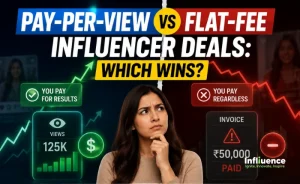
Pick from flat fees, performance-based deals, product seeding, or hybrids. For example, you might do a modest flat plus tiered bonus on tracked sales. Some tools even support direct payments to influencers based on generated views, which keeps payouts objective and fast.

5) Brief and approve content
Provide a tight one-page brief with brand do’s and don’ts, key product hooks, and a sample shot list. Then, collect drafts in one place and approve or request edits. As a result, you cut vague posts and keep compliance clean.
6) Launch and monitor
Watch early signals. Therefore, check click-through, saves, comments, and first tracked orders. Real-time performance tracking and analytics help you double down on what lands and push fixes fast for what stalls.
7) Analyze and iterate
Close with a one-page report: what ran, what sold, cost vs. return, and what to try next. In addition, save standout content in a library for future ads. Capabilities to launch various campaign types, including paid collaborations and product seeding, let you test formats without redoing your process each time.
Finally, keep the loop tight. Document what you learn, adjust your creator criteria, and refine your contract template. That’s how influencer campaign management with contracts and payouts compounds from test to engine.
**Start free payout setup today →
Also Read!
How to Run Influencer Product Seeding Campaigns for E-Commerce Brands
Infliuence vs Sprout Social for Restaurants: Which Is Better for Influencer Campaign Analytics?
5 Mistakes E-Commerce Brands Make with Influencer Contracts and Payouts
Small misses in the agreement or workflow can erase gains. Here are five common traps and the fix for each, based on hard lessons from real campaigns.
-
Vague deliverables
Fix: Write counts, formats, platform handles, go-live dates, and edit rounds in the contract. Therefore, include full caption rules, link/UTM use, and a reshoot clause tied to the brief. -
Missing usage rights
Fix: State where and how you can use the content (organic, paid ads, email, site), for how long, and in which regions. Moreover, align fees to rights. If you add paid usage, sign a short addendum before you boost. -
Flat fees without performance triggers
Fix: Add simple bonus tiers tied to tracked sales or approved views. Built-in contracts, automated payouts, and tax form management make blended models easier to run at scale. -
Ignoring tax compliance (1099s)
Fix: Collect W‑9/W‑8 upfront and issue 1099‑NEC as required. For forms and rules, see the IRS guidance on Forms 1099-MISC and 1099-NEC. As a result, finance won’t scramble in January. -
No content approval window
Fix: Set a draft due date and a clear review window. In addition, define who can approve, how feedback is given, and what happens if posts miss the window.
Furthermore, keep disclosures airtight. The FTC’s Endorsement Guides explain how to make disclosures “clear and conspicuous.” Read the overview from the U.S. Federal Trade Commission and mirror the language in your brief and contract.
Finally, don’t fly blind during the campaign. Real-time performance tracking and analytics let you spot outliers early and fix them before spend or product goes to waste. That’s how influencer campaign management with contracts and payouts stays both fair and profitable.
Tools and Platforms That simplify the Process
You have three paths: manual (spreadsheets and DMs), agencies, or software built for creator work. Spreadsheets are fine for a pilot, but they break on versioning, rights, and payouts. Agencies can add reach and hands-on help, but you trade speed and control. Software gives you one home for briefs, contracts, content, and payments, plus clean reporting.
Tools like Infliuence sit in that last camp. They include AI creator matching so you can search, filter, and connect with creators across niches, regions, and engagement levels. They also include ready-made templates for quick campaign launches, which helps you start in days, not weeks. As social proof, they’re trusted by 50,000+ brands and creators, and most users are Live within 24 hours. Since signing up is completely free, you can test a pilot without budget risk.
"Experience one of its kind influencer marketing—connect with verified influencers, track real-time performance, and gain data-driven insights to build long-term, transparent relationships. No middlemen, no hidden fees." — Testimonials
Moreover, look for contract templates with rights language, automated payouts, and tax form handling in the same place you review drafts. In addition, you want smart analytics and reports that tie posts to sales, so finance and growth see the same truth. If you need a deeper comparison of approaches and trade-offs, bookmark Best Influencer Campaign Management for E-commerce Brands in 2026.
Key Takeaways

- Run a single workflow where contracts, approvals, payouts, and analytics live together.
- Tie goals to revenue, then refine creator criteria and contracts each cycle.
- Blend flat and performance pay; automate taxes and payments to scale with less risk.
- Track sales, engagement, and brand lift in one place, then double down on winners.
What to Do This Week: Launch Your First Structured Campaign
Start small, but start right. Here’s a three-step plan you can kick off now and finish this week.
1) Audit current creator relationships
List every creator you’ve worked with in the past year. Note what they posted, links used, what sold, and whether you have usage rights in writing. As a result, you’ll spot who to re-engage and where the gaps are.
2) Draft a reusable contract template
Create one template with deliverables, deadlines, usage rights, edit rounds, disclosure rules, and payout terms. In addition, include tax form language and a short paid usage addendum. Store it where your team can find and send it fast.
3) Set up a tracking dashboard
Pick a tool that can show data-driven insights to improve your next run. You should be able to search, filter, and connect with creators across niches, regions, and engagement levels, then see sales and engagement by post. If you prefer to build light, a single sheet with post link, date, clicks, orders, and payout status is enough to start.
Moreover, keep this first campaign focused. Choose one product line, five creators, and one channel. Then, run the seven-step workflow above. That’s influencer campaign management with contracts and payouts in practice, not theory.
Finally, give yourself permission to learn. Ship, measure, and make the next one better. The brands that did this saw wins like the Olay Skincare Summer Campaign at 1.02M views with an 84% approval rate, and the Burger King Food Creator Campaign at 954k views with a 73% approval rate. Your version might be smaller, but the method scales.
See pricing and go live fast →