

**Get free creator matches today →
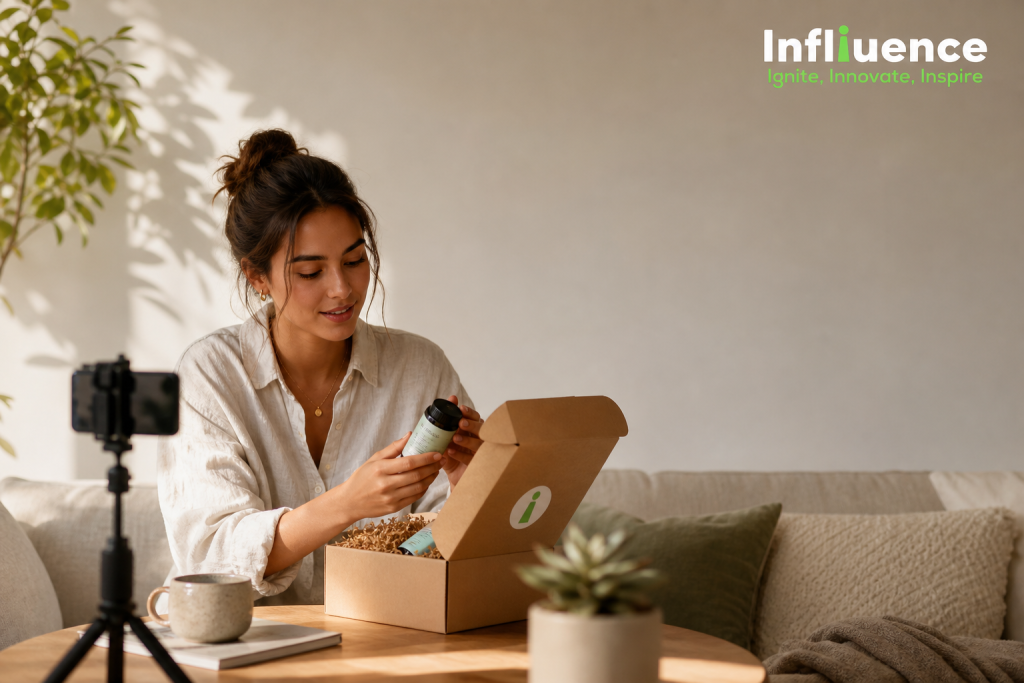
Start small: pick one hero SKU, send 20 thoughtful gifts to well-matched micro-creators, and track posts and sales in one place. This is the core of product seeding and gifting campaigns, and it works in 2026 because it builds trust before you ever talk about fees.
Paid posts can burn cash fast. Gifting flips the script: creators try the product, share what they like, and you get real user content you can reuse across ads, email, and your PDPs. The result is social proof that moves shoppers from “maybe” to “add to cart.
You don’t need a huge budget. You need a clear pitch, clean tracking, and tight follow-up. For context, creator-led work has driven scale for major brands too. The Olay Skincare Summer Campaign hit 1.02M views with an 84% approval rate, while a Burger King Food Creator Campaign reached 954k views with a 73% approval rate. Those numbers prove that short-form creator content can reach real buyers at speed in 2026.
What Is Product Seeding and Why Does It Work for E-Commerce?
Product seeding means you send your product as a gift with no strings attached. Paid collaborations, by contrast, are a scoped deal with a fee, deliverables, and usage rights. Both are valid campaign types, and your stack should support either path.
Gifting works because it mirrors how people actually shop. We buy what friends, creators, and reviews make feel real. That’s social proof in action, a concept explained in social proof. When a creator shares an honest take, their audience leans in. You get content that sounds like a buyer, not a banner ad.
For e-commerce, this matters on the PDP and in ads. Short, snackable clips, unboxings, try-ons, “day 7” check-ins, beat flat studio shots. In addition, you can use that UGC in your socials to get better engagement and higher ROI than brand-only posts. And because you pay in product, your cost to test is low, which helps trim CAC while you learn.
Furthermore, gifting can kickstart a pipeline of creators who later move into paid posts or affiliates. It’s the top of your creator funnel. You learn who loves the brand, who drives clicks, and who you want to sign for a larger push.
- Why seeding converts:
- Authentic reactions beat scripted ads.
- Fast testing reveals what formats and hooks sell.
- You lower cash outlay while you map your best-fit creators.
- You build a bench for future paid collaborations and affiliates.
Where product seeding fits in your mix
Use gifting to test offers, angles, and hooks. Then scale the winners into paid creator deals or ads with allow listing. Your campaign toolset should support both paid collaborations and product seeding so you can move from “test” to “scale” without switching systems.
Step-by-Step: How to Launch a Product Seeding Campaign
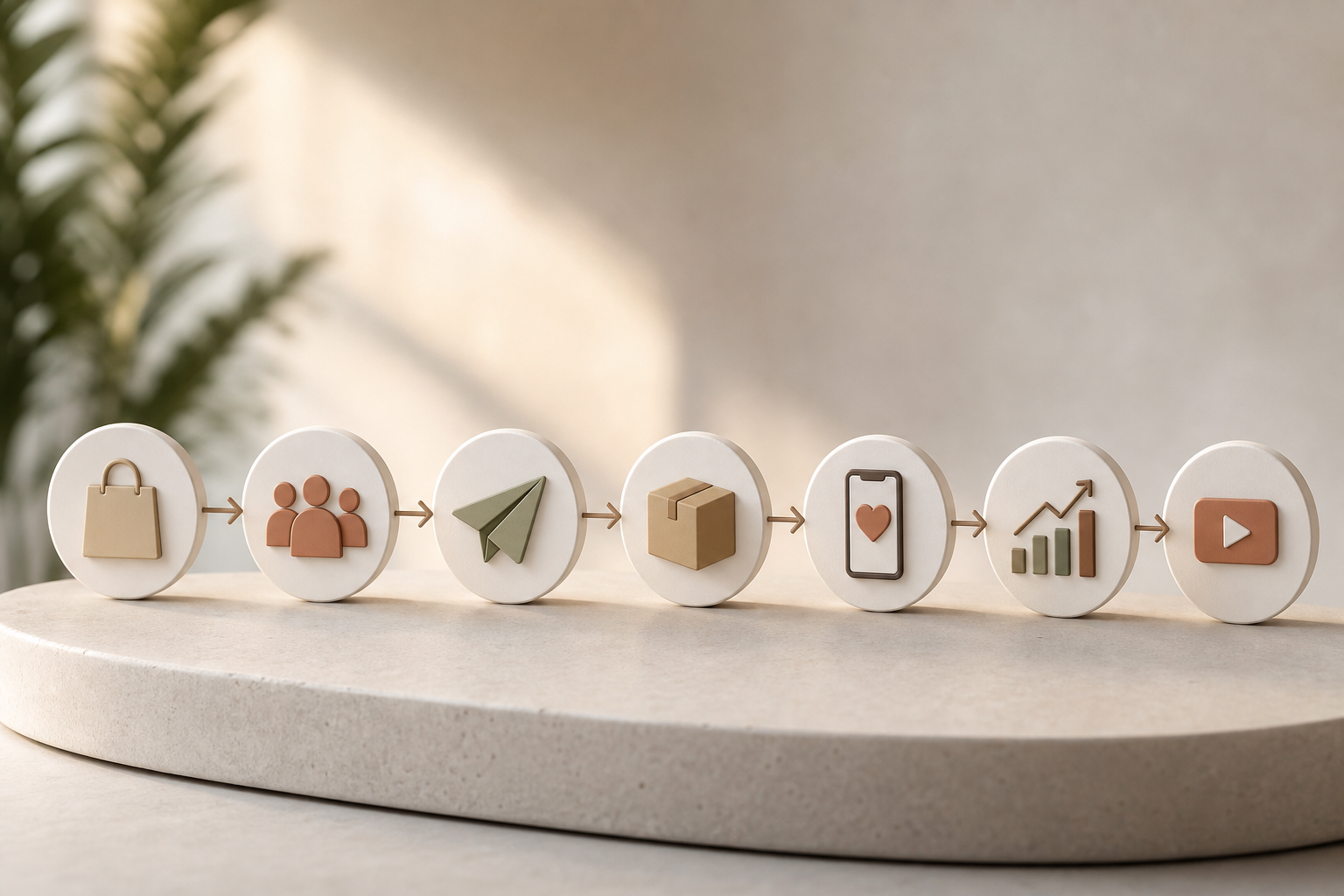
Here’s the seven-step playbook that has held up across hundreds of e-commerce tests in 2026. Keep it lean and repeatable.
Set goals and KPIs-
Decide on one north-star metric: posts live, saves, add-to-carts, or sales with codes. Pick 1–2 support metrics like approval rate or cost per post. Keep attribution simple with unique links, creator codes, or a landing page.Define your ideal creator profile-
Write it down: niche, platform, region, tone, content style, and buyer overlap. For speed, search, filter, and connect with creators across niches, regions, and engagement levels. Tools with AI creator matching can spot lookalike profiles you’d miss by hand.Build a tight shortlist-
Aim for 20–50 creators per SKU test. Check content recency, comment quality, and brand fit. Avoid vanity metrics; your goal is clear content and a buyer-aligned audience. Keep a column for “why they’re a fit” so outreach can speak to that match.
Outreach, guidelines, and follow-up
Craft outreach that gets replies-
Personalize the first line. State the gift, any timing notes, and optional content ideas. Keep asks light (“we’d love your honest thoughts”). Use ready-made templates to move fast, but always add a custom hook so it doesn’t feel like a blast.Set simple content guidelines-
Share the product’s key use-cases, 1–2 proof points, and any must-have shots (e.g., texture close-up, before/after, size on-body). Keep it to one page. Also, include a one-line note on FTC endorsement guidelines with a link to the FTC endorsement guidelines. Clear rules prevent edits later.Ship and follow up-
Confirm sizes, shades, and addresses. Send tracking. Check in 3–5 days after delivery with a helpful note (“here’s how creators style it on day one”).
Nudge once more near your target post window. Be kind. You’re building a long-term bench, not a one-off drop.
- Track, learn, and repurpose-
Log who posted, dates, views, saves, comments, and clicks or sales. Tag top creators for paid or affiliate offers. Download content you have rights to, then test it in ads, on PDPs, and in email. The fastest wins usually come from repurposed UGC.
“Instead of flat catalog shots, they styled the outfits in everyday looks. The content felt natural, and within weeks, our hashtag hit 2M+ impressions.” — VogueRise
Disclosure, timing, and rights
Ask for a post window, not a hard date. Include a short rights line if you plan to reuse the content in ads. Make disclosures easy with a suggested hashtag or caption line that meets the FTC standard. When in doubt, keep it simple and clear.
Also Read!
Infliuence vs Sprout Social for Restaurants: Which Is Better for Influencer Campaign Analytics?
How to Track Influencer Campaign Analytics for Your Restaurant
5 Product Seeding Mistakes E-Commerce Brands Make
You don’t need to pay for errors. Here are the five misses that stall tests and how to fix them with data, process, and real-time tracking.
Mistake 1: Gifting without vetting engagement
Sending product to anyone who asks is a fast way to waste stock. Skim their last 12 posts and read the comments. Are they real and on-topic? Save a lot of pain by scoring quality and consistency, not just follower count. Use data-driven insights to guide your shortlist.
Mistake 2: No content brief
Creators aren’t mind readers. A one-page brief with key use-cases, must-have shots, and a sample hook raises post quality. Moreover, it cuts back-and-forth later. Add your disclosure note and a simple usage rights line if you plan to reuse posts.
Mistake 3: Ignoring micro-creators
Big names look nice, but micro-creators can move more units for the cost. They reply faster and care more about fit. As a result, a test with 20 small creators often beats one large fee in breadth and learning. Keep them in your long-term creator bench.
Mistake 4: Failing to track ROI
If you can’t see what posted and what sold, you can’t scale. Therefore, track posts, reach, saves, and sales codes in one sheet or dashboard. Real-time performance tracking and analytics help you pause weak angles and double down on winners mid-flight.
Mistake 5: Treating seeding as one-off
A one-and-done drop is a missed chance. The real win comes from building ties with the 10–20% who love your product. Offer paid collabs, affiliates, or early access on new SKUs. Furthermore, a steady cadence of gifts keeps content fresh and trust growing.
“Beauty vloggers shared their 30-day routines with our serum. Their before-and-after journeys built the credibility we could never buy.” — PureLeaf Skin
Tools and Platforms That Simplify Product Seeding at Scale
You can run a small test with a spreadsheet and DMs. But as you scale, tools help with discovery, outreach, shipping, and tracking, so you spend time on creative, not copy-paste.
At a minimum, you need three layers:
- Discovery: a creator database to search by niche, region, and audience details.
- Outreach CRM: templates, inbox sync, and deal stages to keep replies moving.
- Tracking and rights: links, codes, sales data, content downloads, and usage terms.
Tools like Infliuence bundle these into one place with an AI-powered platform that connects brands with influencers. You can track sales, engagement, and brand lift in one place, and run both paid collaborations and gifting drops. In addition, built-in contracts, automated payouts, and tax form management save ops hours. It’s trusted by 50,000+ brands and creators, and signing up is completely free.
Competitors you might also evaluate include Grin, AspireIQ, and Upfluence. Compare based on creator quality, inbox workflow, analytics depth, rights handling, and how fast you can launch repeatable campaigns. Your goal is speed to learning, not the longest feature sheet.
**Get a free campaign plan in 24 hours →
Most users are Live within 24 hours, so you can test one SKU this week and scale what works next week.
Key Takeaways for Running Product Seeding Campaigns
You’re not trying to “go viral.” You’re building a repeatable system that turns gifts into sales and long-term creator ties. Here’s what to remember before you send your first box.
- Start with one SKU and 20 creators to learn fast without wasting stock.
- Score creators on fit and comment quality, not just follower count.
- Send a one-page brief and a friendly disclosure note to cut edits later.
- Track posts, saves, clicks, and sales codes in one dashboard to spot winners.
- Turn top creators into paid partners or affiliates to scale results.
- Reuse strong UGC on PDPs, in ads, and in email for higher ROI.
- Use tools that handle search, outreach, rights, and analytics so you can focus on creative ideas.
- Keep a cadence. A steady trickle of posts beats a single big splash for most stores.
Moreover, trust grows with time. The brands that win in 2026 don’t spray and pray; they test, learn, and keep showing up with products creators love to use.
What to Do This Week: Your First Product Seeding Sprint
Here’s a 5-day action plan you can execute right now. It’s small by design, so you can learn and adjust. Treat it as your starter kit for product seeding and gifting campaigns.
Day 1 — Pick one SKU
Choose your hero product with clear use-cases and strong review proof. Write three hooks and two must-have shots. Draft a one-page brief and a short, friendly disclosure line.Day 2 — Build a list of 20 creators
Search by niche, region, and style. Note why each is a fit. Save three sample posts per creator that match your brand tone. Flag five alternates in case of no-replies.Day 3 — Send outreach
Use a tight template with a custom first line. Offer the gift, share the brief, and ask for address details. Aim for 10–12 replies by end of day with one polite nudge.Day 4 — Ship with tracking
Confirm sizes or shades. Ship 12–20 units. Share tracking links and a short “how to get started” tip. Log ETAs, then set follow-ups for 3–5 days post-delivery.Day 5 — Set up tracking and reuse
Create unique links or codes. Prepare folders to save content and a basic sheet to log posts and sales. When the first posts go live, test the best clip on a PDP and in a remarketing ad.
As a result, you’ll have content in the wild within a week and a clean read on what to scale next. Keep your next batch ready, and add 10 more creators the following week.
**Start free and go live in 24 hours →
“Sales spiked 40% in the first month, all through relatable reels.”